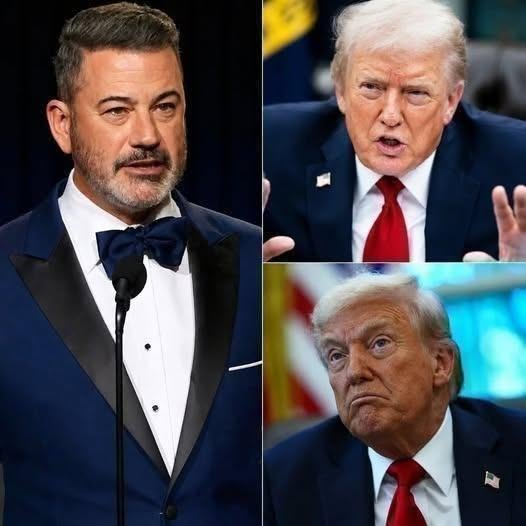
The political atmosphere surrounding Donald Trump has once again become the perfect subject for late-night television, where sharp jokes and biting commentary can turn complicated controversies into national talking points.
Jimmy Kimmel, known for his outspoken criticism of Trump, has frequently used his monologues to question the president’s decisions, challenge his public statements, and mock the controversies that dominate American politics.
Now, an explosive headline circulating online imagines Kimmel delivering a particularly harsh accusation, comparing alleged attempts to bury damaging information through money to the tactics of a mob boss.
But there’s an important distinction: the specific quotation in this headline has not been independently verified. It should be treated as a satirical premise rather than a confirmed statement from Kimmel.
A Battle Between Comedy and Political Power
For years, the relationship between Trump and late-night television has been marked by public criticism, sarcastic exchanges, and competing narratives about leadership.
Kimmel’s political humor frequently targets Trump’s communication style and the controversies surrounding his administration.
His supporters argue that comedians should be free to challenge powerful figures, while critics believe that such commentary can become unnecessarily partisan.
The result is a continuing cultural battle in which television monologues can generate as much online discussion as traditional political speeches.
Why the “Mob Boss” Comparison Is So Provocative
The phrase “mob boss” carries powerful associations with intimidation, secrecy, and attempts to control damaging information. Applying that language to a political figure is therefore a serious rhetorical attack, not simply an ordinary joke.
In political satire, such comparisons are often intended to provoke audiences into questioning whether powerful individuals are being held accountable.
However, rhetoric and evidence are not the same thing. Any allegation involving money, criminal conduct, or an attempt to conceal wrongdoing requires reliable documentation before it can be treated as established fact.
The Money Question at the Center of the Debate
Financial controversies involving political figures often generate intense public interest because they raise questions about transparency, influence, and accountability.
Critics may argue that wealthy individuals have advantages when defending themselves against accusations or managing their public image.
Supporters may counter that financial resources alone do not demonstrate wrongdoing.
The central question is whether specific evidence supports a particular allegation—not whether a dramatic headline sounds convincing.
Late-Night Television’s Growing Political Influence
Late-night hosts now operate in a media environment where jokes can spread across social platforms within seconds. A brief clip may reach millions of viewers before the original broadcast is examined in full.
That speed creates opportunities for political satire to reach new audiences, but it also makes misleading quotations and exaggerated headlines easier to circulate.
For viewers, checking the original video and distinguishing commentary from verified reporting remain essential.
Final Thoughts
The imagined clash between Jimmy Kimmel’s sharp humor and Trump’s political influence captures the confrontational atmosphere of modern American politics.
A headline comparing financial dealings to a mob boss’s tactics may generate outrage and debate, but the specific quotation and underlying allegations must be verified before being presented as fact.