In The Final Days Of Auschwitz, Two Brothers Sat Together Waiting For Death — And Found A Reason To Live
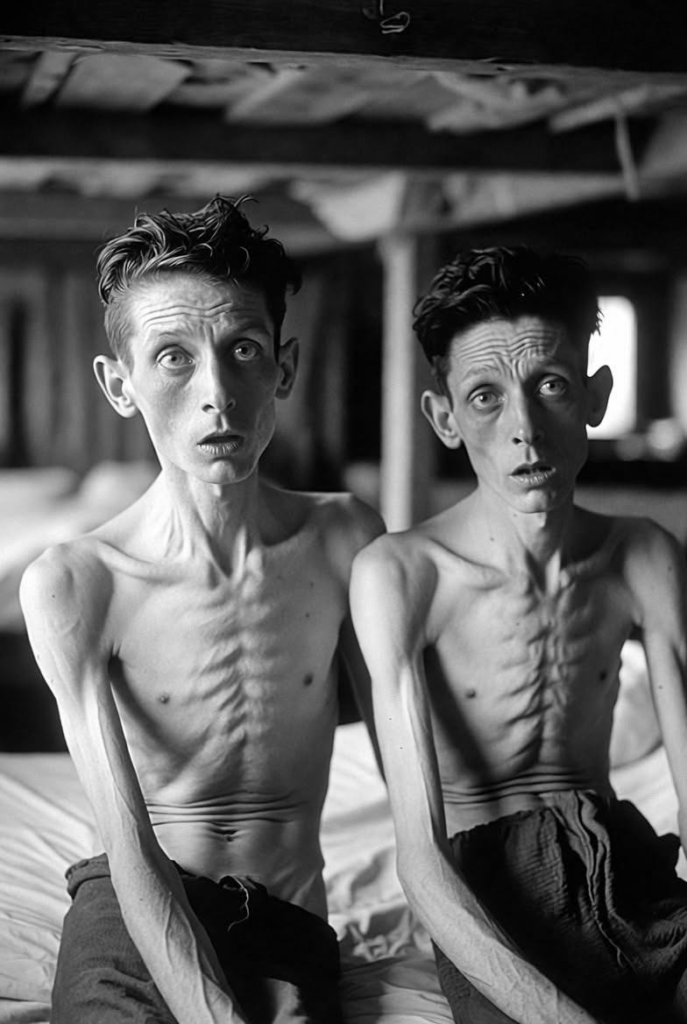
In the final days of January 1945, inside a cold and silent barrack at Auschwitz, two men sat shoulder to shoulder on a wooden bunk.
Their bodies showed the terrible consequences of everything they had endured.
They were painfully thin.
Their ribs were visible beneath their skin.
Their faces were hollow.
Their hands rested weakly in their laps.
They were exhausted beyond words.
For years, the Nazi concentration camp system had taken almost everything from them — their freedom, their health, their homes, and nearly everyone they loved.
Yet one thing remained.
They were still together.
The two men had survived because they had refused to abandon each other.
In a place created to destroy human connection, their brotherhood became a source of strength.
Their story represents one of the most powerful lessons of the Holocaust:
Even in the darkest moments of human history, compassion and loyalty could still survive.
Two Brothers From Czechoslovakia Before The War Changed Everything
Before Auschwitz, Yosef and Levi were simply two brothers living ordinary lives in Czechoslovakia.
They had a family.
A community.
A future they believed they could build.
Like millions of Jewish people across Europe, they never imagined that their lives would soon be transformed by hatred and persecution.
The rise of Nazi Germany brought a nightmare that spread across the continent.
Jewish families were stripped of their rights.
Homes were taken.
Communities were destroyed.
People were deported from the places where their families had lived for generations.
In 1943, Yosef and Levi were among those sent to Auschwitz-Birkenau.
The journey itself was terrifying.
They did not know what awaited them.
But they would soon discover that arriving at Auschwitz meant entering a world designed around suffering.

The Selection Ramp Where Their Fate Was Decided
When they arrived at Auschwitz, they faced the infamous selection process.
Families were separated.
People were judged within moments.
A movement of a hand could determine whether someone was sent to forced labor or immediate death.
Yosef and Levi were sent to the labor side.
That decision gave them a chance.
But survival inside Auschwitz came at a terrible cost.
They were assigned prisoner numbers.
Their names were replaced by identification marks.
The Nazi system attempted to reduce human beings into numbers and labor units.
But the brothers held onto something the camp could not remove.
Their identity as family.
They still had each other.
Life Inside Auschwitz Was A Daily Fight For Survival
The brothers were assigned to brutal labor.
They carried heavy materials.
They dug through frozen ground.
They worked long hours under conditions designed to exhaust and destroy prisoners.
Every day brought hunger.
Every day brought uncertainty.
Food was barely enough to survive.
Meals often consisted of thin soup and small portions of bread.
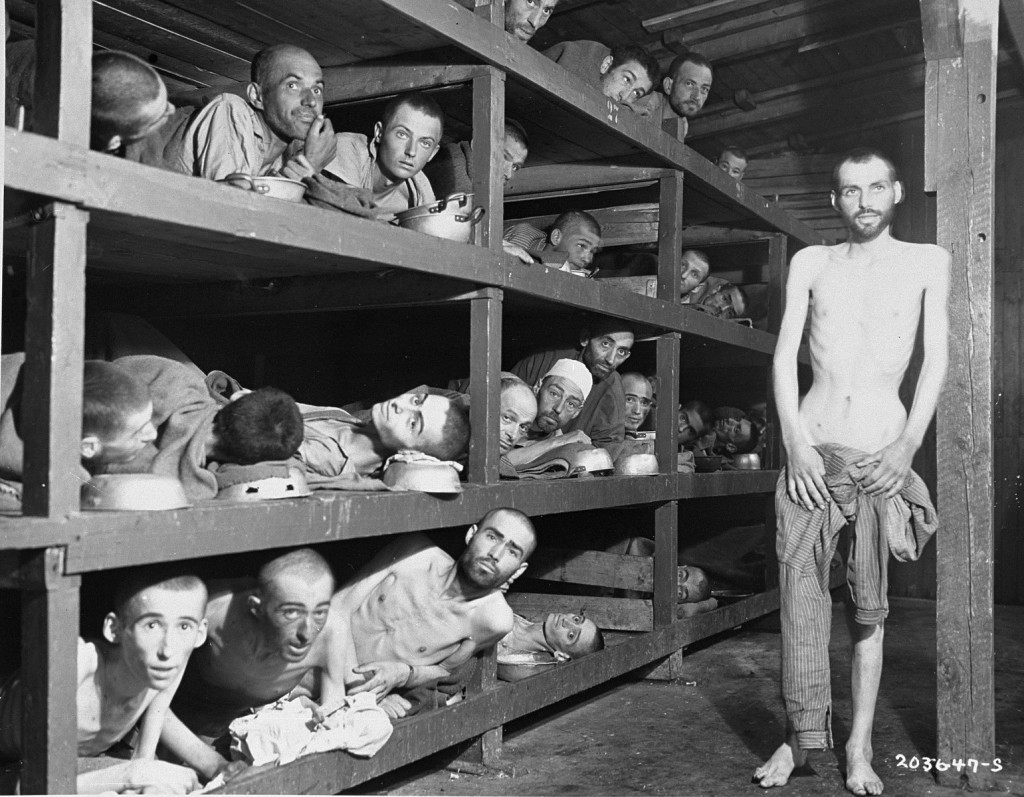
Disease spread quickly through overcrowded barracks.
Beatings were common.
Prisoners disappeared during selections.
Many people who arrived with them never survived.
But Yosef and Levi made a silent promise.
They would not let the other face Auschwitz alone.
The Promise That Kept Them Alive
Inside the camp, survival often depended on small acts of humanity.
A prisoner sharing food.
Someone warning another person about danger.
A hand helping someone stand.
For Yosef and Levi, their greatest source of strength was each other.
When one brother became too weak during roll call, the other supported him.
When one struggled to continue working, the other helped carry the burden.
At night, when temperatures dropped and overcrowded barracks offered little protection, they stayed close together for warmth.
They whispered memories of home.
They remembered the life they had before Auschwitz.
They prayed when they could.
Those moments reminded them that they were still human.
The Nazis controlled almost every part of their existence.
But they could not control their love for each other.
The Final Winter Of Auschwitz
By January 1945, Soviet forces were approaching Auschwitz.
The Nazis knew the camp would soon be discovered.
They began evacuating prisoners.
Thousands were forced onto death marches in freezing conditions.
The goal was to move prisoners away from liberation and hide evidence of what had happened.
Many prisoners died along the way.
They were already starving and exhausted.
The journey was more than many could survive.
Yosef and Levi were among those too weak to leave.
Their bodies had been pushed to the limit.
They remained behind in Auschwitz with thousands of other sick and abandoned prisoners.
Inside the barracks, they waited.
They did not know if rescue would come.
They did not know if they would survive another day.
But they still sat together.

January 27, 1945 — The Moment Freedom Arrived
On January 27, 1945, Soviet soldiers entered Auschwitz.
They found approximately 7,000 survivors.
Many were severely ill.
Many were barely alive.
The soldiers discovered a place that revealed the unimaginable scale of Nazi crimes.
Among those survivors were Yosef and Levi.
The brothers were found exactly as countless survivors were found — exhausted, starving, and weakened by years of suffering.
But they were alive.
They had survived the place designed to destroy them.
Their bond had carried them through the darkest chapter of their lives.
Recovery After Liberation Was Another Battle
Liberation was a moment of freedom.
But recovery was not immediate.
Many survivors needed urgent medical care.
Their bodies had endured years of starvation and disease.
Doctors had to reintroduce food carefully.
They treated infections.
They helped survivors regain strength.
Some people died even after liberation because their bodies had suffered too much damage.
But Yosef and Levi survived.
Slowly, they regained their health.
They became part of the small number of people who lived to tell the story of Auschwitz.

The Brothers Who Spent Their Lives Remembering
After the war, Yosef and Levi rebuilt their lives.
They eventually moved to Israel.
They remained close.
They continued sharing their experiences with others.
When they spoke about Auschwitz, they did not only talk about suffering.
They talked about survival.
They talked about the importance of remembering.
And they always returned to the same message:
They survived because they had each other.
Their story became a reminder that even in a place built around hatred, love and loyalty could still exist.
A Photograph That Shows Both Horror And Hope
The image of the two brothers sitting together became a powerful symbol of Auschwitz.
At first glance, it shows only suffering.
Two men destroyed physically by starvation and cruelty.
Two prisoners who had endured unimaginable conditions.
But when people look closer, they see something else.
They see connection.
They see courage.
They see two people who refused to let the Nazis take away the last piece of humanity they still possessed.
The photograph does not only show what was done to them.
It shows what survived.
The Human Cost Behind The Numbers
More than 1.1 million people were murdered at Auschwitz-Birkenau.
Most were Jewish men, women, and children.
Each victim had a name.
A family.
A story.
The scale of the Holocaust is almost impossible to comprehend.
But stories like Yosef and Levi’s bring history back to the individual level.
They remind us that behind every number was a person.
Someone who loved.
Someone who hoped.
Someone who mattered.
The Meaning Of “Never Again”
Today, Auschwitz-Birkenau stands as a memorial and a warning.
Visitors walk through the preserved barracks.
They see the remains of the camp.
They learn the stories of those who suffered.
They remember those who were murdered.
But they also remember those who survived.
The story of Yosef and Levi teaches an important lesson.
Human beings can endure unimaginable hardship when they have hope and connection.
The Nazis tried to reduce prisoners to numbers.
They tried to destroy families.
They tried to erase identities.
But they failed completely.
Because two brothers survived.
Two brothers remembered.
Two brothers proved that even in the darkest place on Earth, humanity could still remain.

Two Brothers Who Sat Together In Darkness And Found The Light
The world remembers Auschwitz because it represents one of history’s greatest tragedies.
But stories like this remind us why remembrance matters.
Not only because of what was lost.
But because of what survived.
Yosef and Levi entered Auschwitz as brothers.
They left it as witnesses.
Their lives became proof that hatred could not completely defeat love.
That cruelty could not completely erase kindness.
That even in the darkest moments, one person standing beside another can become a reason to keep going.
They sat together in the darkness.
And together, they lived to see the light.