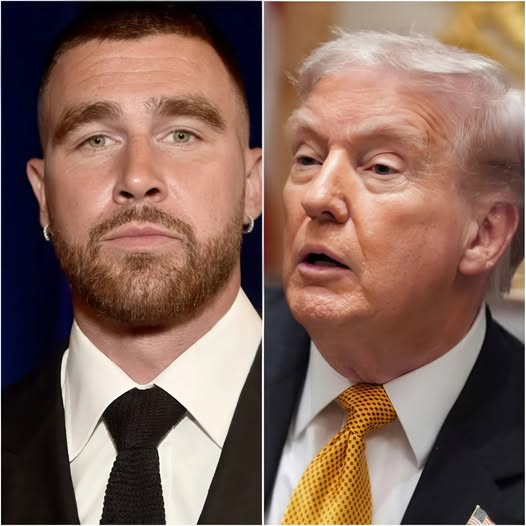
When an NFL Superstar Becomes Part of a Bigger National Conversation
For decades, American sports and American politics existed in two worlds that often touched but rarely collided.
Athletes played on the field.
Politicians debated in Washington.
Fans watched games to escape the constant battles of the political world.
But that separation has changed dramatically.
In modern America, athletes are no longer viewed only as entertainers. They have become cultural figures with enormous platforms, millions of followers, and the ability to influence conversations far beyond the stadium.
Few athletes represent this new reality more than Travis Kelce.
The Kansas City Chiefs superstar has become one of the most recognizable athletes in the world. His success on the football field, his personality, his media appearances, and his relationship with pop culture have transformed him from an NFL player into a global celebrity.
Because of that visibility, every statement connected to him receives enormous attention.
A comment.
A gesture.
A public appearance.
A political reaction.
Everything becomes part of a larger national conversation.
And when a figure like Kelce is connected to discussions involving one of America’s most controversial political figures, Donald Trump, the reaction becomes immediate and intense.
Supporters celebrate.
Critics respond.
The media analyzes every detail.
The result is a fascinating reflection of modern America — a country where sports, entertainment, and politics are increasingly connected.
Travis Kelce’s Rise From Football Star to Cultural Icon
Before becoming a household name, Travis Kelce was known primarily as an elite NFL tight end.
His career with the Kansas City Chiefs established him as one of the greatest players of his generation.
His athletic achievements speak for themselves.
Multiple championships.
Record-breaking performances.
A reputation as one of the most dynamic offensive players in football.
But Kelce’s influence expanded beyond football.
Unlike many athletes who keep their public identity limited to sports, Kelce embraced entertainment.
He appeared on television programs.
He launched media projects.
He developed a reputation for humor and personality.
He became someone fans felt they knew.
That connection helped transform him from an athlete into a cultural personality.
In today’s media environment, that transformation matters.
A famous athlete is no longer simply someone people watch on Sundays.
They can become voices in conversations about society, culture, business, and even politics.

Why Athletes’ Political Opinions Receive So Much Attention
When a professional athlete expresses an opinion, reactions often go far beyond the statement itself.
Why?
Because athletes represent more than themselves.
They represent teams.
Communities.
Generations of fans.
For millions of Americans, sports figures become trusted personalities who have been part of their lives for years.
A quarterback, basketball star, or football champion can influence conversations in ways traditional politicians cannot.
This has happened repeatedly throughout American history.
Athletes have spoken about:
- civil rights
- social issues
- economic inequality
- education
- voting
- national identity
Some fans appreciate athletes using their voices.
Others believe sports should remain separate from politics.
That disagreement has become one of the defining debates of modern sports culture.
Donald Trump and the Power of Celebrity Politics
Donald Trump’s political career has always been closely connected to celebrity culture.
Before entering politics, Trump was already a famous businessman and television personality.
His public image was built around media attention, strong personal branding, and direct communication with audiences.
His supporters often viewed his celebrity background as an advantage.
They believed it allowed him to communicate outside traditional political systems.
His critics argued that politics should not function like entertainment.
Regardless of perspective, one fact is undeniable:
Trump changed the relationship between celebrity and politics in America.
He demonstrated how fame could become a powerful political tool.
The Clash Between Two Different Public Images
The attention surrounding figures like Travis Kelce and Donald Trump comes partly from the contrast between their public identities.
Trump’s image has long been associated with political confrontation, direct attacks, and a willingness to challenge traditional norms.
Kelce’s public image has largely been built around sports success, personality, entertainment, and connection with fans.
When two highly recognizable figures enter the same national conversation, the reaction becomes amplified.
People do not simply respond to words.
They respond to what those figures represent.
To some people, celebrity voices bring important perspectives into public discussions.
To others, celebrity influence creates unnecessary division.
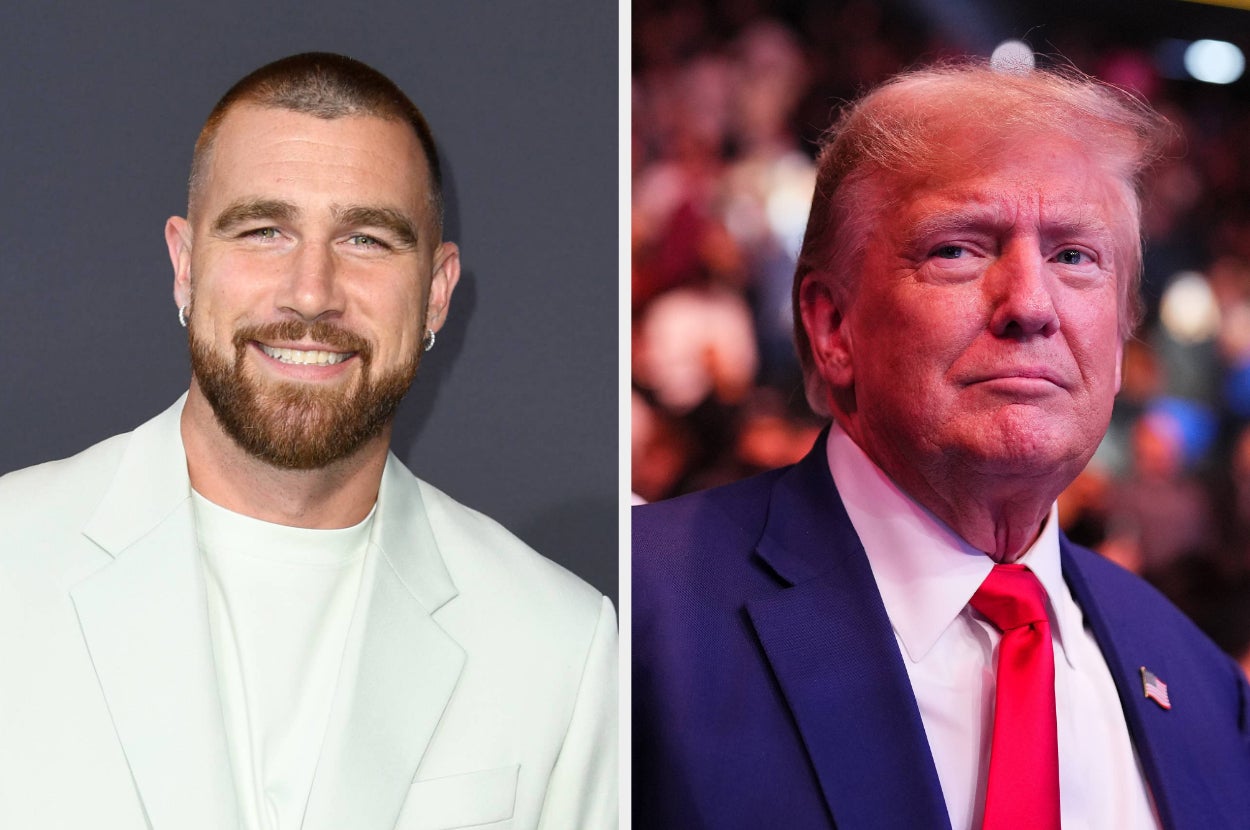
The Modern Media Machine: How One Moment Becomes a National Story
In previous generations, a public figure’s comments might appear in newspapers the following day.
Today, the process is completely different.
A single clip can spread worldwide within minutes.
Social media platforms allow supporters and critics to immediately react.
News organizations analyze the moment.
Commentators debate the meaning.
Memes appear.
The original statement can sometimes become less important than the reaction surrounding it.
This is the environment where modern celebrities operate.
Every public appearance carries potential consequences.
The Challenge of Speaking Publicly in a Divided America
For athletes and entertainers, expressing political opinions comes with risks.
If they remain silent, some people criticize them for avoiding important issues.
If they speak, they may lose fans who disagree.
There is rarely a response that satisfies everyone.
This reality creates a difficult decision:
Should public figures use their influence on issues they care about?
Or should they focus only on their professional roles?
There is no universal answer.
Different Americans have different expectations.
Why Fans Often Feel Personally Connected to Athletes
One reason sports figures create such strong reactions is emotional connection.
Fans spend years watching athletes succeed and fail.
They celebrate victories.
They experience disappointments.
They feel connected to the journey.
Because of that connection, opinions from athletes can feel personal.
A fan may not simply think:
“I disagree with this person.”
They may feel:
“This person I admired represents something different than I believed.”
That emotional reaction explains why discussions involving athletes and politics become so passionate.
The Future of Athlete Influence in America
The role of athletes in society will likely continue growing.
Younger generations consume information differently.
They follow personalities across multiple platforms.
The distance between sports, entertainment, business, and politics continues shrinking.
Future athletes may become not only competitors but also entrepreneurs, media personalities, and social influencers.
Their voices will continue shaping public conversations.
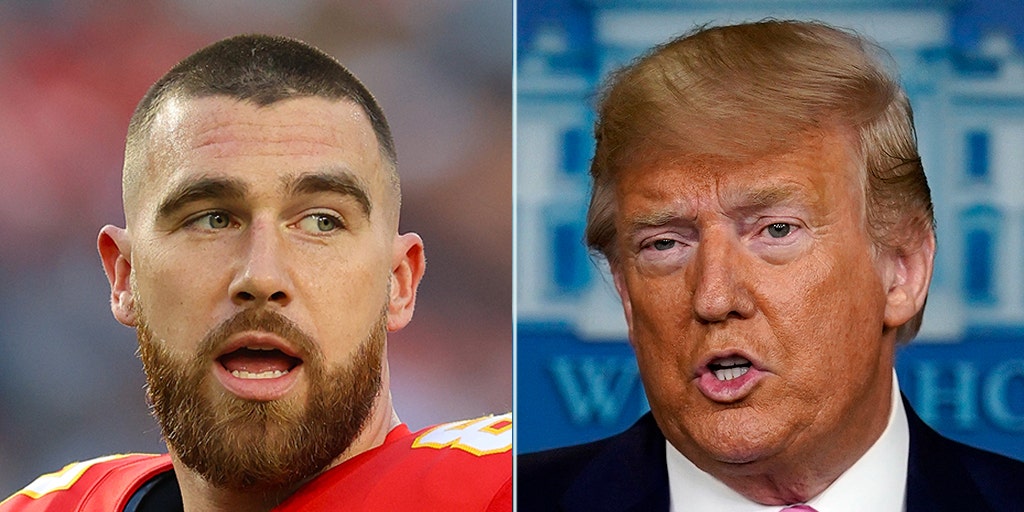
Beyond the Headlines: What This Moment Reveals About America
Whether people support or criticize figures like Travis Kelce, the larger story is not only about one athlete or one politician.
It is about a changing country.
America is experiencing a new era where influence comes from many places:
- politicians
- athletes
- entertainers
- business leaders
- online creators
The traditional boundaries between these worlds are disappearing.
A football player can become part of a national political discussion.
A former president can remain a dominant cultural figure.
A single image or statement can create millions of reactions.
That is the reality of modern public life.
Conclusion: The New Era of Influence
Travis Kelce’s fame represents more than football.
Donald Trump’s influence represents more than politics.
Together, the conversations surrounding figures like them reveal something important about America today:
Power is no longer held only by elected officials or traditional institutions.
Influence belongs to anyone with the ability to reach millions of people.
The debate over whether athletes should speak about politics will continue.
Some will argue that public figures have a responsibility to use their voices.
Others will argue that entertainment should remain separate from political conflict.
But one thing is certain:
In the modern world, the spotlight does not end when the game ends.
For athletes, celebrities, and leaders alike, every word can become part of history.
And every public moment can become a national conversation.
