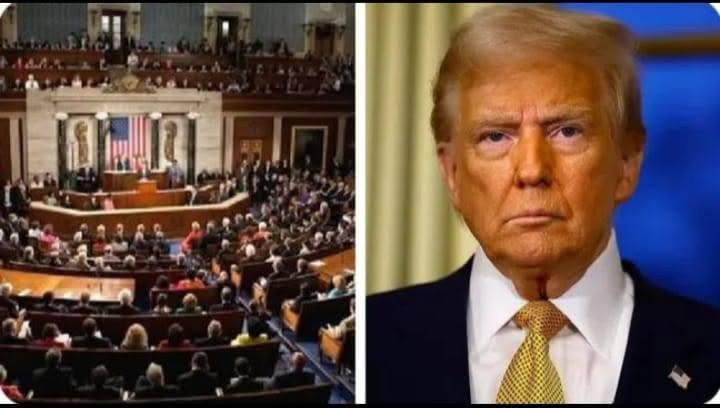
Senate Moves to Limit Trump’s Military Action in Venezuela
The U.S. Senate has taken a significant procedural step toward limiting President Donald Trump’s ability to conduct further military operations in Venezuela without congressional approval.
On January 8, 2026, senators voted 52–47 to advance a War Powers resolution dealing with U.S. military action in and around Venezuela.
The vote reflected a broader debate in Washington over presidential authority, congressional oversight, and the limits of executive power during military operations.
The vote did not immediately enact a law preventing Trump from using military force.
Instead, it advanced the measure for further consideration.
The resolution still faced additional legislative hurdles, including consideration by the House of Representatives and the possibility of a presidential veto.
What the Senate Vote Means
The War Powers Resolution is designed to give Congress a role in decisions involving U.S. military forces.
The measure considered by the Senate sought to restrict further military action against Venezuela unless Congress provided authorization.
The 52–47 vote was notable because several Republican senators joined Democrats in supporting the procedural move.
Reuters reported that five Republicans supported advancing the resolution, highlighting bipartisan disagreement over how much authority the president should have in military matters.
Supporters of the measure argued that Congress should have a meaningful role before the United States becomes involved in an extended military conflict.
Critics, meanwhile, questioned whether Congress could use the War Powers framework to restrict the president’s authority as commander in chief.
Why Venezuela Has Become a Major Issue
The Senate debate followed a U.S. military operation involving Venezuela that resulted in the capture of Venezuelan President Nicolás Maduro, according to reporting at the time.
The Trump administration characterized the operation as a limited action connected to U.S. national-security and law-enforcement objectives rather than the beginning of a traditional occupation or prolonged war.
Republican lawmakers who received classified briefings also argued that the administration did not intend to pursue an “endless war” in Venezuela.
Democratic lawmakers and some other senators raised different concerns, particularly about the possibility of additional military operations and whether Congress had been adequately consulted.
That disagreement became central to the War Powers debate.
A Constitutional Question
At the heart of the dispute is a longstanding question in American government:
How much authority does a president have to use military force without receiving specific authorization from Congress?
The U.S. Constitution divides national-security powers between the executive and legislative branches.
The president serves as commander in chief, while Congress has important powers relating to declaring war, funding government activities, and regulating the armed forces.
The War Powers Resolution of 1973 was created in the aftermath of the Vietnam War and was intended to strengthen congressional oversight of presidential military actions.
Supporters of the Venezuela resolution cited this framework in arguing that Congress should have a say in any continuing military engagement.
Opponents argued that the president retains constitutional authority to respond to national-security threats and conduct certain military operations without first obtaining a formal authorization from Congress.
Republicans and Democrats Divided
The 52–47 vote showed that the issue did not fall entirely along traditional party lines.
Most Democrats supported advancing the resolution, while a number of Republicans joined them.
At the same time, other Republican senators argued that the president should retain significant flexibility when responding to national-security situations.
The Congressional Record shows that senators offered sharply different interpretations of the constitutional balance between Congress and the presidency.
Some lawmakers argued that military action requires stronger congressional involvement, while others defended the president’s authority under Article II of the Constitution.
These competing interpretations are likely to remain part of the debate as Congress considers what should happen next.
What Happens Next?
The Senate’s 52–47 vote was an important procedural development, but it did not settle the dispute.
For the measure to become effective through the legislative process described in contemporaneous reporting, it would need to clear additional congressional hurdles.
Reuters reported that the resolution faced consideration in the Republican-led House and would also encounter the possibility of a presidential veto.
Overriding a presidential veto would require a two-thirds majority in both chambers.
That means the Senate vote alone did not immediately change U.S. military policy.
The future of the measure therefore depended on subsequent congressional action, negotiations between lawmakers, and the administration’s response.
Concerns About a Longer Military Commitment
Another major issue surrounding the debate was whether U.S. involvement in Venezuela could remain limited or develop into a longer-term commitment.
Some lawmakers expressed concern that an initial military operation could eventually lead to a broader U.S. presence.
Others argued that the administration’s objectives were limited and that the operation should not automatically be interpreted as the beginning of a prolonged conflict.
President Trump also discussed the possibility of extended U.S. involvement in Venezuela, including oversight of the country’s oil revenues, according to Reuters.
Those comments added another dimension to the congressional debate over what the United States’ long-term role in Venezuela might look like.
Venezuela’s Political Future
The congressional debate is also taking place against the backdrop of major political changes inside Venezuela.
Following the U.S. operation and Maduro’s capture, Venezuela’s interim government faced pressure over political prisoners and the country’s political transition.
Reuters reported that the government agreed to release numerous political prisoners, while human-rights groups estimated that hundreds remained detained.
The United States was also discussing Venezuela’s oil industry and the possibility of major investment by American energy companies.
These developments mean that the debate in Washington is not limited to military policy.
It also involves questions about Venezuela’s political future, economic reconstruction, sanctions, energy resources, and the role the United States should play in the country’s transition.
Why the Vote Matters
The Senate vote highlights a broader institutional debate that has appeared repeatedly throughout U.S. history: the balance between presidential authority and congressional oversight during military operations.
For lawmakers who supported the resolution, the issue is primarily about Congress maintaining its constitutional role in decisions involving military force.
For those who opposed it, the concern is that congressional restrictions could interfere with the president’s ability to respond quickly to national-security threats.
Both sides therefore presented the vote as part of a larger constitutional discussion rather than simply a disagreement over Venezuela.
The Story Is Still Developing
The 52–47 Senate vote was an important step, but it was not a final decision ending Trump’s ability to use military force against Venezuela.
The resolution still faced additional legislative and constitutional questions, and the administration continued to defend its interpretation of presidential authority.
As Congress considers the measure and lawmakers debate the future of U.S. involvement in Venezuela, the situation could continue to evolve.
For now, the Senate vote has put congressional war powers and presidential authority back at the center of Washington’s debate over Venezuela.
Further action by the House, the Senate, the White House, and potentially the courts could determine how the dispute develops in the weeks ahead.
Disclaimer: This article provides general news information and describes an ongoing political and legal dispute. It does not endorse any political party, candidate, or position.