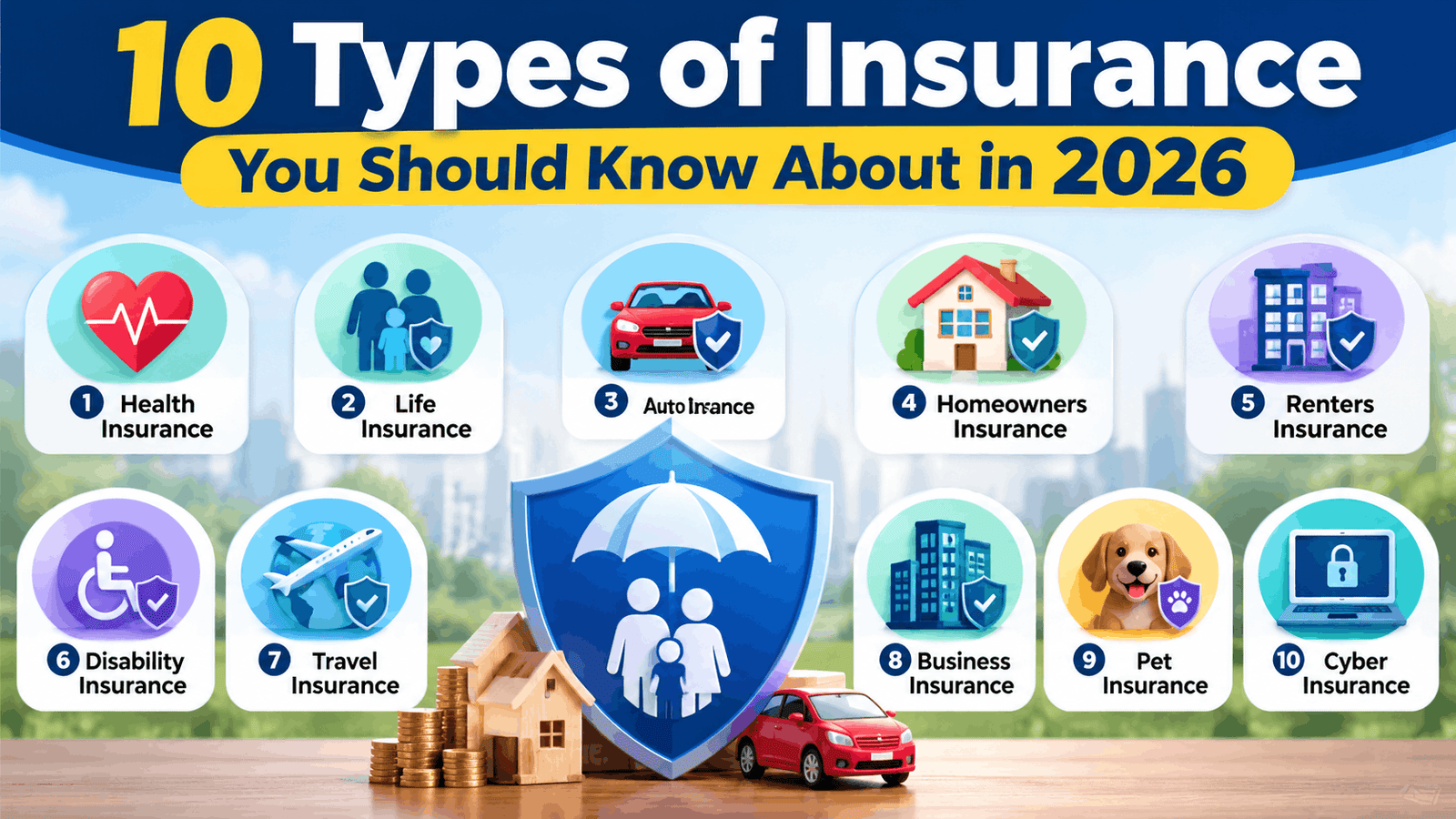
Insurance is an important part of financial planning. It helps individuals, families, and businesses manage the financial impact of unexpected events such as accidents, illnesses, property damage, theft, and loss of income.
With changing economic conditions, healthcare costs, technology, and emerging risks, understanding different types of insurance is increasingly important in 2026. The right insurance coverage can protect your savings, assets, income, and family from significant financial losses.
However, insurance policies can be confusing, especially for beginners. There are many types of coverage, and each one is designed to protect against specific risks.
In this guide, we’ll explain 10 types of insurance you should know about in 2026, what they generally cover, and who may benefit from them.
What Is Insurance?
Insurance is a financial agreement between a policyholder and an insurance company. The policyholder pays a premium, and the insurer provides protection against specific risks covered by the policy.
If a covered event occurs, the policyholder can generally submit a claim. If the claim meets the policy’s requirements, the insurer may pay eligible expenses or benefits, subject to deductibles, limits, exclusions, and other terms.
Insurance doesn’t prevent unexpected events, but it can reduce their financial impact.
1. Health Insurance
Health insurance helps individuals and families manage eligible healthcare expenses. Medical treatment can be expensive, particularly when serious illnesses, injuries, or hospitalization are involved.
Depending on the policy, health insurance may help cover:
- Doctor visits
- Hospitalization
- Emergency treatment
- Prescription medications
- Diagnostic tests
- Preventive healthcare
- Specialist services
Health insurance plans differ significantly in terms of premiums, deductibles, networks, coverage, and out-of-pocket costs.
Who Needs Health Insurance?
Health insurance can be valuable for individuals, families, employees, self-employed workers, and others who want protection against potentially high medical expenses.
2. Life Insurance
Life insurance is designed to provide financial protection for beneficiaries after the insured person’s death.
The policyholder pays premiums, and if the insured dies while the policy is active and the claim meets its terms, the insurer generally pays a death benefit to the designated beneficiaries.
Life insurance can help beneficiaries manage:
- Household expenses
- Outstanding debts
- Mortgage payments
- Education costs
- Funeral expenses
- Loss of income
Main Types of Life Insurance
Common types include:
- Term life insurance
- Whole life insurance
- Universal life insurance
The right type depends on your financial objectives, budget, and family’s needs.
3. Auto Insurance
Auto insurance protects drivers against certain financial losses related to vehicle accidents and other covered events.
Depending on the policy and location, coverage may include:
- Liability
- Collision
- Comprehensive coverage
- Uninsured or underinsured motorists
- Medical or personal injury protection
Auto insurance is particularly important because drivers can face substantial costs after an accident.
In many locations, certain forms of auto liability insurance are legally required.
4. Homeowners Insurance
Your home may be one of your largest financial assets, making homeowners insurance an important form of protection for eligible homeowners.
A homeowners policy may provide coverage for:
- The home’s structure
- Personal belongings
- Certain additional structures
- Liability claims
- Additional living expenses after certain covered losses
Covered events vary by policy, so homeowners should carefully review exclusions and coverage limits.
Mortgage lenders may also require homeowners to maintain insurance.
5. Renters Insurance
People who rent a home or apartment may not need homeowners insurance, but their belongings can still face risks.
Renters insurance generally provides protection for eligible personal property and may include liability coverage.
It can help cover losses involving items such as:
- Furniture
- Electronics
- Clothing
- Appliances
- Personal possessions
Depending on the policy, renters insurance may also help with certain additional living expenses after a covered event makes a rental temporarily uninhabitable.
6. Disability Insurance
Your ability to earn an income is one of your most valuable financial assets.
Disability insurance can replace part of your income if a covered illness or injury prevents you from working.
There are two common categories:
Short-Term Disability Insurance
Short-term disability coverage generally provides income replacement for a limited period.
Long-Term Disability Insurance
Long-term disability insurance can provide benefits for a much longer period, depending on the policy’s definition of disability and benefit duration.
Disability insurance may be especially important for people whose families depend heavily on their income.
7. Travel Insurance
Travel plans can be disrupted by unexpected events. Travel insurance can provide financial protection against certain travel-related problems.
Depending on the policy, coverage may include:
- Trip cancellation
- Trip interruption
- Travel delays
- Lost or delayed baggage
- Emergency medical expenses
- Emergency evacuation
Coverage varies considerably between policies, so travelers should check exclusions, limits, and eligibility requirements before purchasing a plan.
8. Business Insurance
Businesses face risks that individuals may not encounter. Business insurance helps companies manage financial losses resulting from certain covered events.
Common forms of business insurance include:
- General liability insurance
- Commercial property insurance
- Professional liability insurance
- Workers’ compensation
- Business interruption insurance
- Commercial auto insurance
The appropriate coverage depends on the company’s size, industry, employees, property, customers, and potential liabilities.
Why Business Insurance Matters
A lawsuit, property loss, cyber incident, or operational interruption can create significant expenses. Appropriate insurance can help a business recover from certain unexpected events.
9. Pet Insurance
Veterinary care can become expensive, particularly when pets require emergency treatment, surgery, diagnostic testing, or ongoing care.
Pet insurance can help eligible pet owners manage certain veterinary expenses.
Depending on the plan, coverage may include:
- Accidents
- Illnesses
- Surgery
- Diagnostic tests
- Prescription medications
Some policies may offer wellness-related benefits, while others focus primarily on accidents and illnesses.
Pet owners should carefully review waiting periods, exclusions, reimbursement percentages, annual limits, and deductibles before purchasing coverage.
10. Cyber Insurance
As businesses increasingly depend on digital technology, cyber insurance has become an important consideration.
Cyber insurance can help businesses manage certain financial losses associated with cyber incidents such as data breaches, ransomware, hacking, and other covered cybersecurity events.
Depending on the policy, coverage may help with:
- Data recovery
- Legal expenses
- Customer notification
- Cyber incident response
- Business interruption
- Certain liability costs
Cyber insurance is particularly relevant for businesses that store sensitive customer information or rely heavily on digital systems.
How to Choose the Right Insurance
Having insurance doesn’t automatically mean you’re adequately protected. The amount and type of coverage should match your individual circumstances.
Consider the following factors before buying a policy.
Assess Your Risks
Identify the assets, income, health needs, family responsibilities, and potential risks you need to protect.
Compare Coverage
Don’t compare policies based only on premiums. Review coverage limits, deductibles, exclusions, benefits, and conditions.
Check the Deductible
A deductible is the amount you may have to pay toward a covered loss before the insurer contributes. Make sure you can afford the deductible if you need to make a claim.
Understand Exclusions
Exclusions identify situations that aren’t covered. Reading these sections can prevent unpleasant surprises later.
Compare Insurance Providers
Consider the insurer’s reputation, financial strength, customer service, claims process, and policy options.
Common Insurance Mistakes to Avoid
Avoid these common mistakes when purchasing insurance:
- Choosing a policy based only on price
- Buying insufficient coverage
- Ignoring exclusions
- Selecting unaffordable deductibles
- Failing to compare providers
- Forgetting to update beneficiaries
- Letting policies lapse
- Not reviewing coverage after major life changes
Regularly reviewing your policies can help ensure your coverage continues to match your needs.
Insurance Trends to Watch in 2026
The insurance industry continues to evolve as technology and consumer expectations change.
Important trends include:
- Artificial intelligence in underwriting
- Digital claims processing
- Usage-based auto insurance
- Personalized insurance products
- Digital policy management
- Expanded cyber insurance
- Technology-assisted risk assessment
- Increased focus on climate-related risks
These developments may make insurance more personalized and convenient, although consumers should still carefully review policy terms.
Final Thoughts
Understanding the different types of insurance in 2026 can help you make better financial decisions and prepare for unexpected events. Health, life, auto, homeowners, renters, disability, travel, business, pet, and cyber insurance each address different risks.
You don’t necessarily need every type of insurance. The right combination depends on your income, assets, family responsibilities, lifestyle, occupation, location, and financial goals.
Before purchasing coverage, compare policies carefully and pay attention to premiums, deductibles, coverage limits, exclusions, and claim requirements. A policy that fits your needs can provide valuable financial protection when you need it most.
Frequently Asked Questions
What are the most important types of insurance?
Health, life, auto, homeowners or renters, and disability insurance are among the major types many individuals may consider. The right choices depend on personal circumstances.
Is insurance mandatory?
Some types of insurance are required by law in certain locations. For example, auto liability insurance is legally required in many jurisdictions. Other policies may be optional but financially valuable.
How much insurance coverage do I need?
The appropriate amount depends on your financial situation, assets, income, dependents, and potential risks. Coverage should be sufficient to protect against realistic financial losses without creating unnecessary costs.
Can I have multiple types of insurance?
Yes. It is common for individuals and families to have several policies covering different risks, such as health, life, auto, home, and disability insurance.
How often should I review my insurance policies?
Review your insurance at least once a year and whenever you experience a major life change, such as marriage, having a child, purchasing a home, changing jobs, or starting a business.