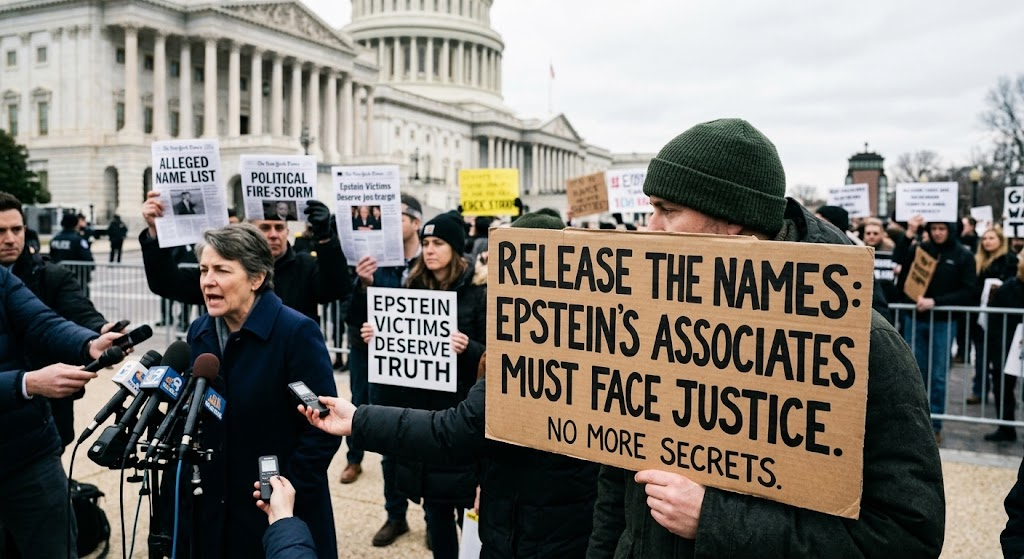
Washington has once again found itself at the center of a political and media frenzy after claims circulated online that survivors of Jeffrey Epstein’s abuse were preparing to release their own list of names, along with details about when and where the information would allegedly become public.
The internet, naturally, reacted with all the subtlety of a fire alarm.
Within minutes, speculation began spreading across social media, with commentators trying to predict who might appear on the alleged list and what consequences could follow.
Then came an even more dramatic twist: survivor Juliette Bryant was reportedly being linked to comments involving President Donald Trump. The claim immediately became fuel for another round of political speculation, with people interpreting every phrase as though it were a secret message hidden inside a congressional hearing.
But there is an important distinction between a survivor speaking publicly, an alleged future release, and verified evidence about a person’s conduct. Simply appearing on a list, being mentioned by someone, or being connected to Epstein socially would not by itself establish criminal wrongdoing.
That distinction, unfortunately, tends to disappear somewhere between the first social-media post and the 47th repost.
Meanwhile, political commentators are already preparing their favorite Washington vocabulary: bombshell, explosive, shocking, unprecedented, and, inevitably, this changes everything.
Whether an actual list is released—and what it contains—would need to be established through credible, verifiable sources rather than viral screenshots or anonymous posts.
Until then, the biggest confirmed fact may simply be that the internet has once again turned a developing story into a full-blown political thriller.
And Washington?
Washington is probably refreshing the timeline.
Satire/Commentary: This article uses humor and exaggeration. Allegations concerning real people should not be treated as established facts without reliable evidence.