A Supposed Moment In Washington That Sparked A Nationwide Argument
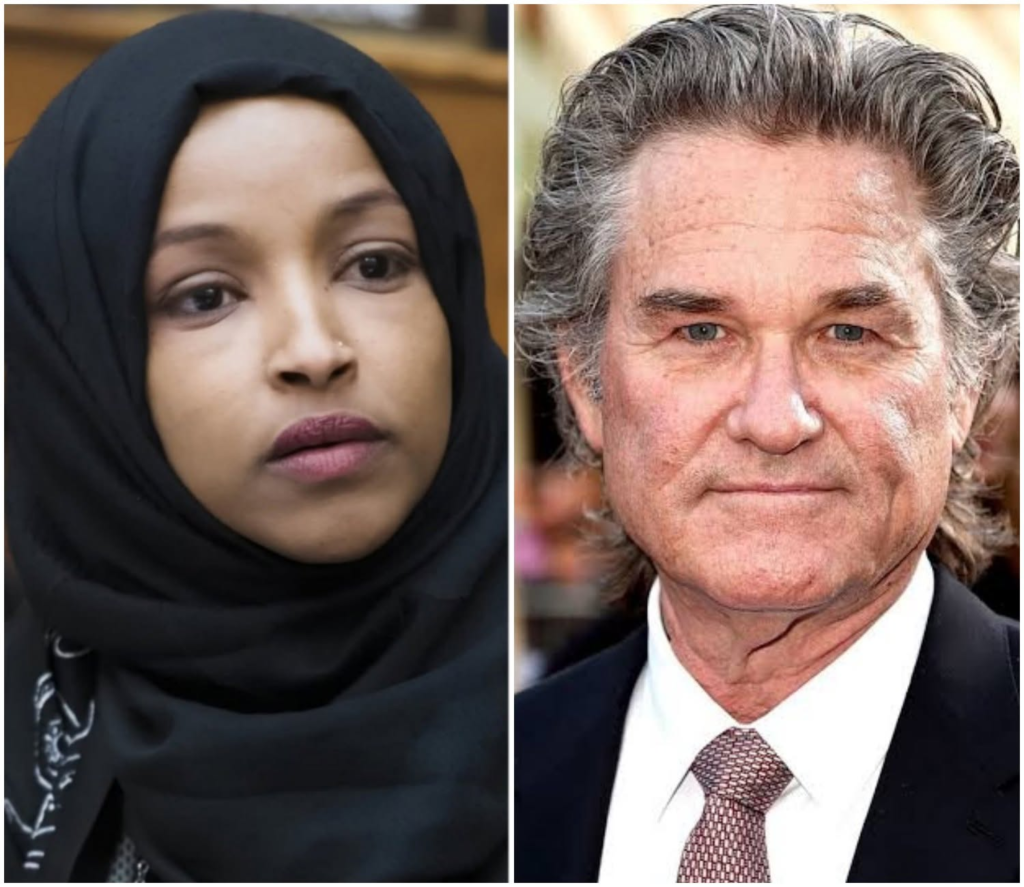
A dramatic political story spreading online has captured widespread attention by imagining a tense confrontation between Hollywood actor Kurt Russell and Representative Ilhan Omar during a congressional-style hearing.
The story describes a moment where a discussion about national identity, immigration, and patriotism suddenly transformed into a heated exchange over what it means to love and criticize one’s country.
According to the viral narrative, Russell delivered a passionate statement defending national pride and questioning whether public figures should criticize the nation while benefiting from its opportunities.
The imagined exchange quickly gained attention because it touched on some of the most emotionally charged issues in American politics:
What does patriotism really mean?
Can someone criticize their country while still loving it?
How should immigrants who become citizens balance appreciation for their new home with the right to express disagreement?
These questions have existed for generations, and they continue to create intense debate across the United States.

The Complicated Meaning Of Patriotism
Patriotism is one of the most powerful and debated concepts in American life.
For many people, patriotism means honoring the country’s history, traditions, symbols, and institutions.
It represents gratitude toward the freedoms and opportunities America provides.
For others, patriotism also means having the courage to criticize the country when they believe it has failed to live up to its ideals.
They argue that questioning government decisions, pointing out injustice, and demanding improvement are not signs of hatred.
Instead, they believe those actions are part of participating in democracy.
This difference in interpretation often creates conflict.
One side may view criticism as disrespect.
The other may view criticism as an expression of commitment — a desire to make the country better.
The debate is not simply about politics.
It is about competing ideas of what loyalty looks like.
The Debate Over Immigrants And National Belonging
The viral story also focuses on a long-running American conversation about immigration.
The United States has always been shaped by immigrants.
Millions of people have arrived seeking safety, opportunity, and a better future.
Many Americans view immigration as one of the country’s greatest strengths.
At the same time, immigration debates often involve questions about national identity, cultural change, and public responsibility.
Some argue that people who become citizens should show strong appreciation for the country that accepted them.
Others argue that becoming American does not require giving up the right to criticize policies or leaders.
For many immigrants, the ability to speak openly about problems is considered one of the freedoms that attracted them to the United States in the first place.
This tension has been part of American politics for decades.

Why Celebrity Voices Create Such Strong Reactions
When celebrities enter political discussions, their words often receive enormous attention.
Actors, musicians, and athletes have large audiences who already recognize their work and personalities.
Supporters may see celebrity statements as important cultural conversations.
Critics may argue that fame does not automatically equal political expertise.
Kurt Russell, known for decades of acting roles, has built a public image separate from government or political office.
That is why any supposed political statement from him would naturally attract attention.
Fans often connect celebrities with certain values based on their careers, interviews, and public personalities.
A single statement can become symbolic far beyond the individual who made it.
The Power Of Viral Political Stories
The internet has transformed how political conversations develop.
In previous decades, a controversial statement might appear on television or in newspapers before reaching a national audience.
Today, a short clip, quote, or headline can spread worldwide within minutes.
This creates opportunities for more people to participate in discussions.
But it also creates challenges.
Unverified claims can spread quickly.
Context can disappear.
Emotions can move faster than facts.
A dramatic story can become widely shared before anyone confirms whether the event actually occurred.
This is why separating verified information from online speculation has become increasingly important.

The Larger Question: Can Disagreement And Patriotism Exist Together?
At the heart of the debate is a question that has no simple answer:
Can someone love a country while criticizing it?
Many Americans believe the answer is yes.
They argue that the nation’s founding principles include debate, disagreement, and the ability to challenge authority.
Others believe that public criticism, especially from influential figures, should be balanced with appreciation and respect.
Both perspectives come from different understandings of what strengthens a nation.
One emphasizes unity and gratitude.
The other emphasizes accountability and improvement.
Throughout American history, these two ideas have existed side by side.
Why Moments Like This Continue To Divide People
Political conflicts often become emotional because they are connected to personal identity.
For some people, national symbols represent sacrifice, family history, and personal pride.
For others, those same symbols represent complicated historical experiences that require continued discussion and reform.
Because these issues are deeply personal, debates can quickly become heated.
People are not only arguing about policies.
They are arguing about values.
They are arguing about what kind of country they believe America should become.
Beyond The Headlines: A Conversation About America’s Future
Whether a viral political confrontation is real or simply an online narrative, the reason it captures attention is because it reflects real questions facing society.
What responsibilities come with citizenship?
What rights should people have to criticize their government?
How can a country maintain unity while allowing disagreement?
These questions will continue shaping American conversations.
A strong democracy requires both pride and self-reflection.
It requires people who appreciate what works while remaining willing to address what does not.
Because a country is not defined only by agreement.
It is also defined by the ability of its people to debate, challenge, and continue building a better future together.
The loudest arguments may create the biggest headlines.
But the most important conversations are often the ones that force people to think more deeply about what their country means — and what kind of future they want to create.